Swimming pools
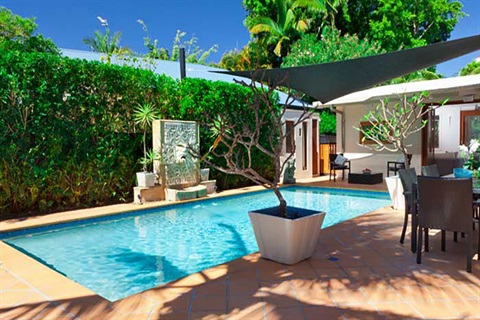
Topping up a swimming pool involves adding water to replenish what's lost due to evaporation, leaks, or other reasons, and it's often done using a garden hose.
To save water and money, we recommend water efficiency measures like pool covers or rainwater tanks. Rainwater tanks are obviously an ideal source of water and best of all, you don’t need to pay for it, and you can feel good about being self-sufficient.
As a guide we have put together an estimate of what you can expect to see on your water account on top of your typical bill by filling or topping up your swimming pool or spa.
How much will it cost to fill my pool
How much it will cost will depend on the size of your swimming pool or spa. The average garden hose uses 25 litres per minute so on average, running your hose for one (1) hour will use approximately 1500 litres.
The below figures are a guide only and based on the 2026/2027 fees and charges.
| Pool (approximate volume) |
Based on $3.03 per kilolitre |
| 20,000 litres (20kL) |
$60.60 |
| 30,000 litres (30kL) |
$90.90 |
| 40,000 litres (40kL) |
$121.20 |
| 50,000 litres (50kL) |
$151.50 |
| Spa (approximate volume) |
Based on $3.03 per kilolitre |
| 750 litres |
$2.27 |
| 1,000 litres |
$3.03 |
| 1,500 litres |
$4.55 |
| 2,000 litres |
$6.06 |
Do you want to be drinking pool water?
When topping up your pool you should never leave your hose submerged in the pool water as this creates a cross-connection which may allow your pool water to be drawn back up the line.
Always leave an air gap between the hose and the pool.
Where should the backwash water go?
All backwash water should be directed to the sewerage system with the discharge at no more than two (2) litres per second.
Under no circumstance should backwash wastewater be directly discharged to the environment or to the stormwater system. The wastewater is extremely harmful to the environment and promotes weed growth in natural bushland areas.